Tel/wechat/whatsapp : +86 13758983507
Email : info@homeindoor.cn
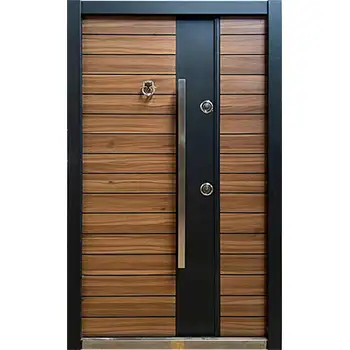
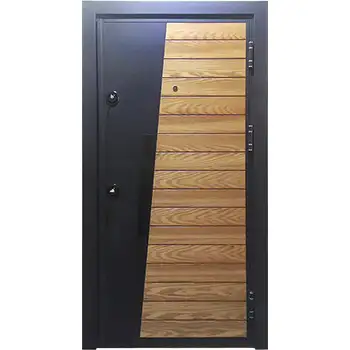
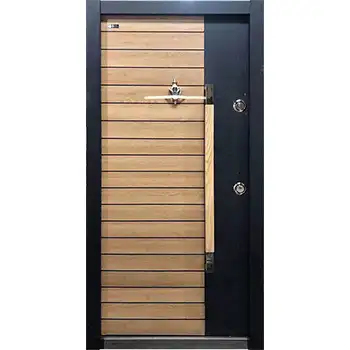
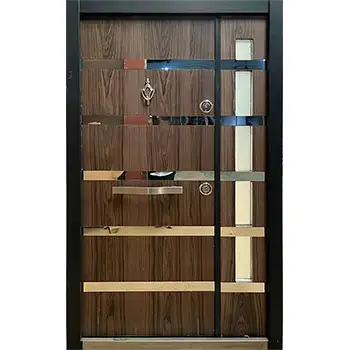
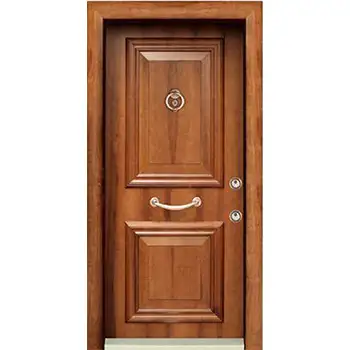
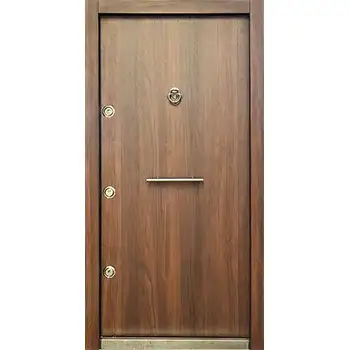
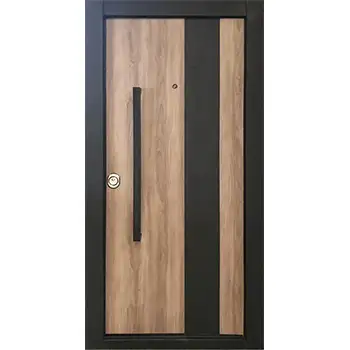
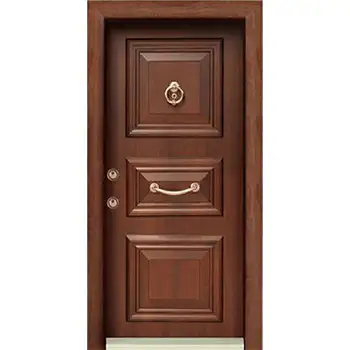
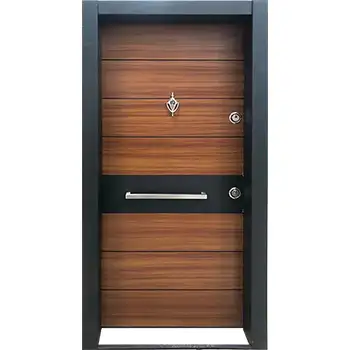
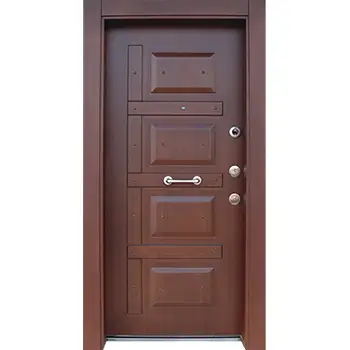
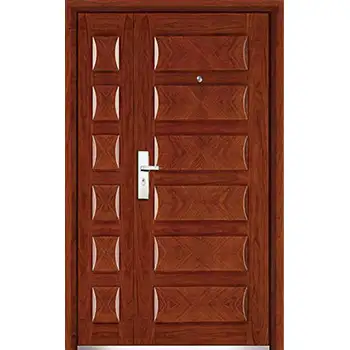
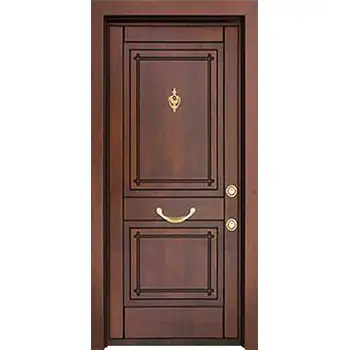
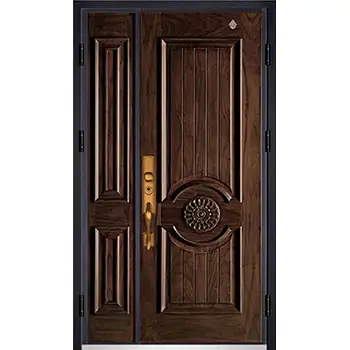
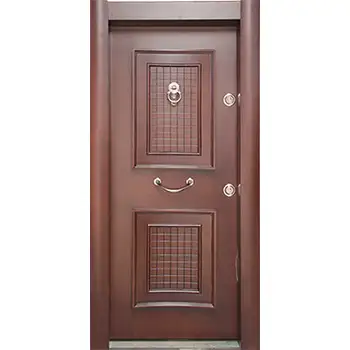
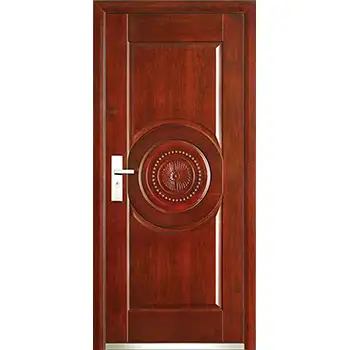
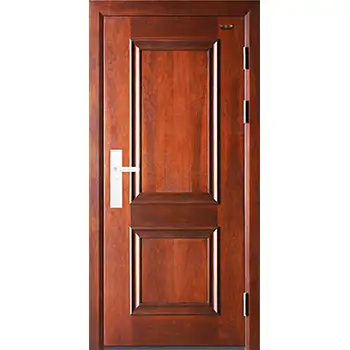
A steel-wood security door, also called a steel-wood armoured door is a high-strength entrance door that combines the protective performance of steel with the warm appearance of wood. It is designed for villas, apartments, residential buildings where the door must provide security, durability, insulation, and interior design value at the same time.
Unlike a normal wooden door, a steel-wood security door is not mainly made by timber or engineering wood. Its real strength comes from the internal steel structure, reinforced door leaf, strong frame, lock protection system, hinges, and multi-point locking mechanism. The wood, MDF, veneer, laminate, or other decorative surface gives the door a architectural appearance, making it suitable for modern interior and exterior design. In simple words, it is a door with a steel security body and a wood-style decorative face.
A steel-wood security door is built with a strong steel core or steel skeleton inside the door leaf. The front and back surfaces can be finished with natural wood panels, MDF boards, HPL, PVC film, melamine board, paint, or other decorative materials. This structure allows the door to look elegant like a wooden entrance door while performing more like a security door.
In many markets, this type of door is also known as a steel-wood armoured door, armored entrance door, armoured security door, wood-clad steel door, steel core wood door, or steel-wood anti-theft door; In Russia and Eastern Europe, similar products are often described as armored entrance doors with wood or MDF finishing. In Turkey, steel doors with wood finish are very common for apartment entrances and villa doors. In Mexico and other Spanish-speaking markets, the door may be described as puerta de seguridad, puerta blindada, or puerta acorazada with wood finish.
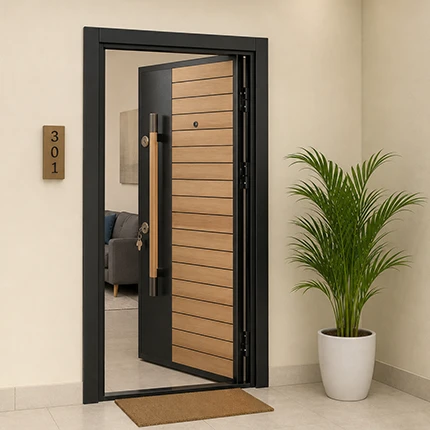
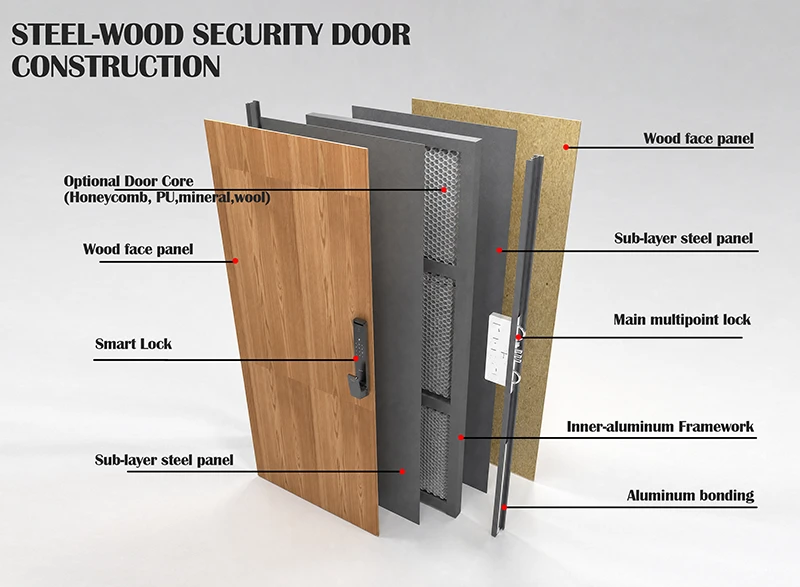
The core advantage of a steel-wood security door is its composite structure. A typical door may include the following parts:
The first part is the steel frame or steel skeleton inside the door leaf. This internal structure gives the door its main strength and resistance to forced entry. The steel skeleton may include vertical and horizontal reinforcements, lock reinforcement plates, hinge reinforcement plates, and steel ribs to improve rigidity.
The second part is the steel sheet or armoured steel layer. Depending on the product level, the door leaf may use one or two layers of steel sheet. Higher-security models usually use thicker steel, stronger ribs, and better anti-pry construction. The steel layer helps resist impact, cutting, bending, and forced opening.
The third part is the filling material. Common fillings include honeycomb paper, aluminum honeycomb, polyurethane foam, mineral wool, rock wool, fire-resistant board, or acoustic insulation material. The filling improves sound insulation, heat insulation, fire performance, door flatness, and overall stability.
The fourth part is the decorative wood surface. This is the visible part of the door. It may be natural wood veneer, solid wood cladding, MDF, plywood, engineered wood, laminate, PVC film, powder-coated wood grain finish, or painted panel. The decorative surface allows the door to match interior walls, flooring, furniture, hotel corridors, apartment lobbies, or villa façades.
The fifth part is the edge banding and finishing system. Many steel-wood armoured doors use stainless steel edging, aluminum edging, steel wrapping, or concealed metal edge protection. Good edge treatment prevents moisture from entering the door, protects the decorative panel, and improves long-term durability.
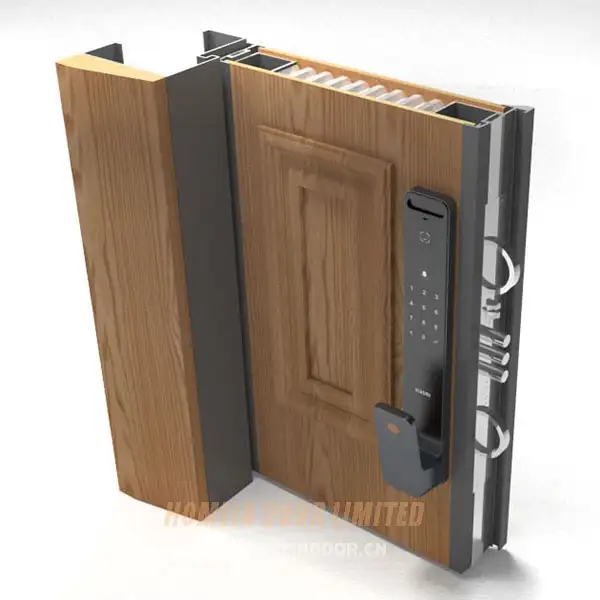
Security is the first reason many customers choose a steel-wood security door. A normal wooden door can be attractive, but it is easier to break, cut, pry, or damage. A full steel door is strong, but it look too cold or industrial, can not match a high-end redsidential project. A steel-wood armoured door solves this problem by combining protection and appearance.
A high-quality steel-wood security door should protect against forced entry methods such as prying, kicking, drilling, lock attack, hinge attack, and frame deformation. To achieve this, the door should use a reinforced steel body, anti-pry edges, strong hinges, lock protection plates, a reliable cylinder, and a multi-point locking system.
The lock system is especially important. The steel-wood security doors use a main lock together with side locking points, upper locking bolts, lower locking bolts, and anti-lift or anti-pry bolts. When the door is locked, the bolts extend into the steel frame at several points, making it much harder to force the door open from one side.
However, more lock points alone do not automatically mean better security. The whole system must be designed correctly. The door leaf, frame, hinges, lock body, cylinder, strike plates, installation screws, wall connection, and threshold must work together. A strong door with a weak frame or poor installation will not provide real protection.
| Comparison Item | Ordinary Wooden Door | Steel-Wood Security Door |
|---|---|---|
| Internal Structure | Mainly depends on wood, engineered wood, or hollow core materials. | Uses steel as the main protective structure, with wood finish on the surface. |
| Main Application | Suitable for bedrooms, bathrooms, offices, closets, and interior partitions. | More suitable for building entrances, apartments, hotels, offices, and villas. |
| Security Performance | Not ideal as a high-security entrance door. | Stronger, heavier, more stable, and better for security protection. |
| Surface Appearance | Mainly shows natural wood or painted wood appearance. | Wood finish is mainly used for appearance, comfort, and design matching. |
| Lock System | Usually uses a simple latch lock or standard mortise lock. | Usually uses stronger locks, reinforced cylinders, and multi-point locking systems. |
| Hardware | Standard hinges and basic door accessories. | Heavy-duty hinges, anti-pry bolts, reinforced hardware, and security accessories. |
| Insulation | Limited sound and thermal insulation, depending on the door core. | Can include sound insulation and thermal insulation filling. |
| Suitable Environment | Best for normal indoor rooms. | Suitable for apartments, hotels, offices, villas, and noisy or cold environments. |
| Comparison Item | Normal Steel Security Door | Steel-Wood Security Door |
|---|---|---|
| Main Focus | Focuses mainly on function, security, and cost. | Focuses on security, design flexibility, and high-end appearance. |
| Door Surface | Usually uses a simple pressed steel panel with basic powder coating. | Can use wood veneer, MDF, paint, laminate, metal inlay, grooves, or custom decorative panels. |
| Appearance | Strong and economical, but the appearance may look simple or industrial. | Looks warmer, more elegant, and more suitable for residential or luxury projects. |
| Design Options | Limited design choices, usually simple colors and pressed patterns. | Can be matched with oak, walnut, teak, ash, ebony, white paint, grey paint, black wood grain, and custom patterns. |
| Application | Suitable for standard apartments, utility buildings, warehouses, and cost-sensitive projects. | Suitable for luxury houses, hotel apartments, high-end offices, villas, and designer interiors. |
| Architectural Freedom | Offers limited freedom for architects and developers. | Gives architects and developers more freedom to match different interior and exterior styles. |
| Visual Feeling | More functional and practical. | Warmer, more residential, and more premium. |
| Project Impression | Mainly works as a security barrier. | Works as both a security barrier and an important part of the building’s first impression. |
| Security Structure | Uses steel as the main protective structure. | Keeps the protective steel structure inside while adding a refined decorative surface. |
Steel-wood security doors can be finished in many styles. Natural wood veneer is popular for luxury homes because it gives a real wood texture and warm color. Oak, walnut, teak, cherry, ash, and smoked veneer are common choices.
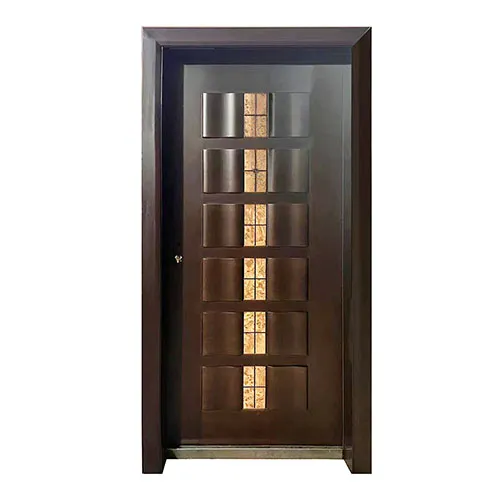
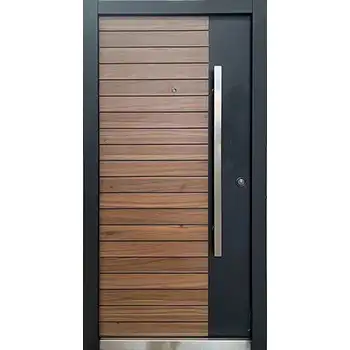
Painted finishes are suitable for modern apartments and minimalist interiors. White, grey, black, beige, champagne, and dark bronze are common colors. Painted panels can be flat, grooved, embossed, or combined with metal strips.
Laminate and HPL surfaces are practical for commercial buildings, hotels, and apartments because they are easier to clean and more resistant to scratches. PVC or melamine finishes are often used for budget-friendly projects.
For exterior use, the finish must be chosen carefully. Direct sunlight, rain, humidity, temperature changes, and coastal environments can damage ordinary wood surfaces. Exterior-grade paint, outdoor veneer treatment, aluminum edging, waterproof engineered board, or UV-resistant coating should be considered.
A steel-wood security door is only as strong as its frame and installation. The frame should be made from strong steel or steel combined with decorative casing. For higher security, the frame should be firmly fixed into the wall with proper anchors, expansion bolts, or welded fixing points.
The gap between door leaf and frame should be controlled precisely. If the gap is too large, the door becomes easier to pry. If the gap is too small, the door may rub, make noise, or fail to close smoothly. Good installation also requires correct alignment, strong hinge fixing, proper threshold setting, and sealing around the frame.
For apartment projects, the frame may be installed before interior decoration, while the decorative surface panels can be protected or installed later to avoid damage during construction. For luxury villas, customized measurement is important because oversized doors, pivot doors, double doors, and special wall thicknesses require detailed technical drawings.
Common hardware for a steel-wood security door includes a main lock, security cylinder, handle, heavy-duty hinges, door viewer, automatic drop seal, threshold
Smart locks are becoming more popular in residential and apartment projects. They can provide fingerprint access, password access, card access, mobile phone control, temporary visitor codes, and access records. However, when choosing a smart lock, mechanical security should not be ignored. A smart function is convenient, but the lock body, cylinder, anti-drill plate, emergency key, power backup, and data security are also important.
For hotel or apartment projects, the hardware should be selected according to the project requirement. A luxury villa door may need a designer handle and smart lock. A rental apartment may need a durable mechanical lock. A hotel door may need RFID access and automatic closing. A commercial project may need access control integration.
A good steel-wood security door can also improve comfort. Sound insulation is important for apartments, hotels, offices, and buildings facing roads or public corridors. The combination of a heavy door leaf, internal filling, sealing strips, tight frame connection, and automatic bottom seal can reduce sound transmission.
Thermal insulation is also valuable, especially for exterior entrance doors in countries with a cold climte (like russia,canada). Filling materials such as PU foam, mineral wool can help reduce heat transfer. For cold regions, thermal break design and proper sealing are also important. Thermal insulation help saving energy in winter
Some steel-wood security doors can be designed with fire-resistant materials, but not every steel-wood armoured door is automatically a fire-rated door. If the project requires fire performance, the door must use tested fire-resistant core materials, approved hardware, correct frame design, suitable seals, and certified fire-rated construction.
This is especially important for apartments, hotels. Fire rating and anti-theft performance are different technical requirements. A project should clearly define whether it needs security performance, fire performance, acoustic performance, thermal performance, or all of them.
For international projects, security doors should be specified according to recognized standards where possible. In Europe, EN 1627 is commonly used for burglar resistance classification, with resistance classes from lower to higher security levels. Related test methods evaluate static load, dynamic load, and manual attack resistance.
In the UK, PAS 24 and Secured by Design are often used for enhanced security doorsets in residential and building projects. In China, burglary-resistant security doors follow the national standard GB 17565. Different countries and regions may use different rules, so the buyer should confirm the required standard before ordering.
A serious door supplier should not only talk about steel thickness. They should be able to explain the full doorset performance, including door leaf, frame, lock, cylinder, hinge, seal, threshold, installation method, and certification. Security is not one part; it is the result of the whole system.
In Russia and Eastern Europe, steel and armored entrance doors are widely used for apartments, houses, offices, and commercial buildings. Many products emphasize steel structure, insulation, lock protection, and strong frames because cold climate and security are both important.
In Turkey, steel doors are very common in residential buildings. Many Turkish-style steel doors use decorative surfaces, strong steel bodies, and multi-point lock systems. Wood-look finishes are popular because they provide a warm and elegant appearance while keeping the strength of steel.
In Europe, armoured doors are often connected with certified burglar resistance classes and high-quality design. Italian-style armoured doors, for example, are known for combining security, minimalist appearance, hidden hinges, removable panels, acoustic insulation, and premium finishes.
In Mexico and other Spanish-speaking markets, security doors are often marketed as puerta de seguridad, puerta blindada, or puerta acorazada. Customers often look for steel construction, thermal and acoustic insulation, multiple bolts, panoramic viewers, and wood-like decorative finishes.
In China, 钢木装甲门 is commonly used in high-end residential and villa projects. It is often positioned as an upgraded version of the traditional anti-theft door because it combines a steel security structure with decorative wood panels that can match interior design.
When choosing a steel-wood security door, the first point is security level. The buyer should consider the building type, location, crime risk, entrance position, and required certification. A villa entrance, apartment corridor door, hotel room door, and commercial office entrance may need different specifications.
The second point is structure. Ask about steel thickness, internal ribs, lock reinforcement, hinge reinforcement, filling material, frame structure, and anti-pry design. Do not judge the door only by weight or appearance.
The third point is lock quality. A strong door needs a reliable lock system. Choose a qualified lock body, high-security cylinder, strong strike plates, and a locking system that matches the door structure.
The fourth point is surface material. For indoor apartment entrances, veneer, MDF, HPL, or painted panels may be suitable. For exterior doors exposed to weather, choose moisture-resistant and UV-resistant materials.
The fifth point is installation. Even the best door can fail if it is installed poorly. Proper measurement, wall anchoring, frame leveling, sealing, hardware adjustment, and final inspection are necessary.
A steel-wood security door needs regular maintenance. The hinges should be checked and lubricated when needed. The lock should operate smoothly without forcing the key or handle. The sealing strips should remain flexible and complete. The surface should be cleaned with suitable products according to the finish type.
For exterior doors, inspect the surface coating, edge sealing, and bottom area regularly. Rainwater, sunlight, dust, and humidity can affect the finish over time. If the wood veneer or paint is damaged, repair it early to prevent moisture from entering the panel.
Smart locks should be checked for battery condition, emergency power access, mechanical key backup, and software settings. For commercial or apartment projects, access permissions should be managed carefully.
A steel-wood security door is an ideal solution for residential projects that need both protection and design. It has the strength of a steel security door and the warm, premium appearance of a wooden entrance door. With the right steel structure, reinforced frame, multi-point lock, quality filling, durable surface, and professional installation, it can provide security, comfort, sound insulation, thermal insulation, and long service life.
For villas, apartments, and high-end residential buildings, the steel-wood armoured door is more than a door. It is the first security barrier, the first design impression, and an important part of the building’s value. When specified correctly, it offers the best combination safety, beauty, durability, and modern architectural style.
We have no minimum order quantity and accept orders in any quantity.Whether you need a single door or material for an entire project, we offer affordable product price and shipping to your country
Any size within the maximum size range can be customized,
Of course,We have a wide range of standard colors to choose from, and we can also produce according to the color card provided by the customer.
Of course, we can ! Our profesional designer can provide detailed design drawings to confirm the specifications and materials before production.
You can also download reference drawing on our website
Of course, we can provide different materials, colors, styles, prices of hardware accessories for customers to choose, where you can one-stop shopping for doors and accessories! Most of our hardware is made in china (chinese brand), We can also supply hardware made by international Top brands (such as Häfele, Dorma), or Equivalent China-made hardware
Tel/wechat/whatsapp : +86 13758983507
Email : info@homeindoor.cn
Scan to contact us by wechat

Copyright Homein Door Limited