Tel/wechat/whatsapp : +86 13758983507
Email : info@homeindoor.cn
Comprehensive Guide to Steel Louver Doors: Sizes, Designs, Types, and Applications
When it comes to choosing doors that offer ventilation, security, and durability, steel louver doors—also known as metal louver doors—are an ideal solution. Their unique construction allows air to flow freely while protecting interiors from the elements, enhancing both comfort and safety. This article offers a thorough exploration of steel louver doors, focusing on everything from size and design options to materials, fire ratings, and applications.
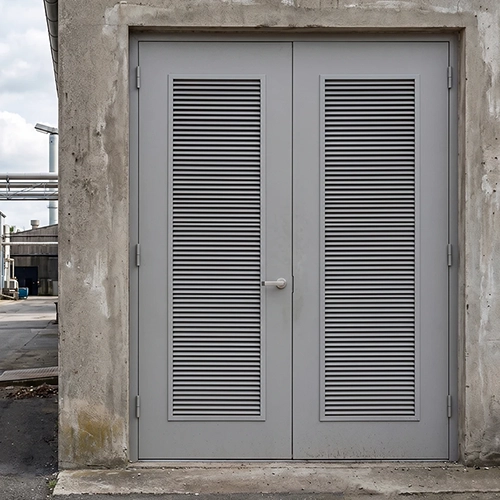
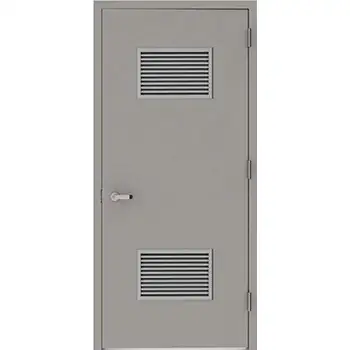
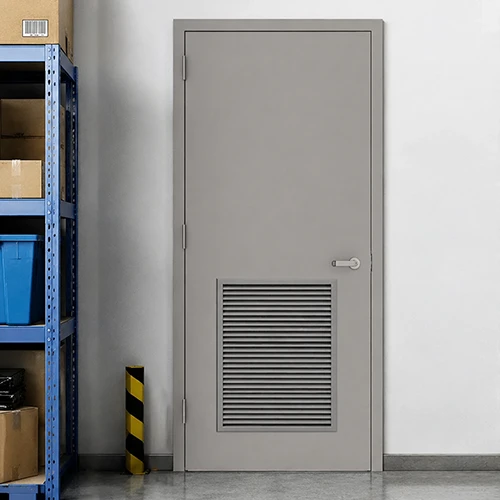
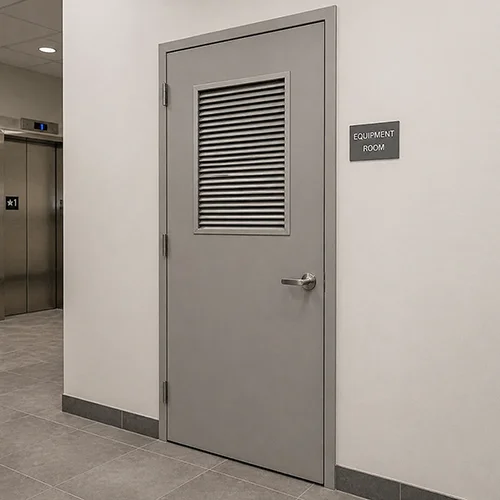
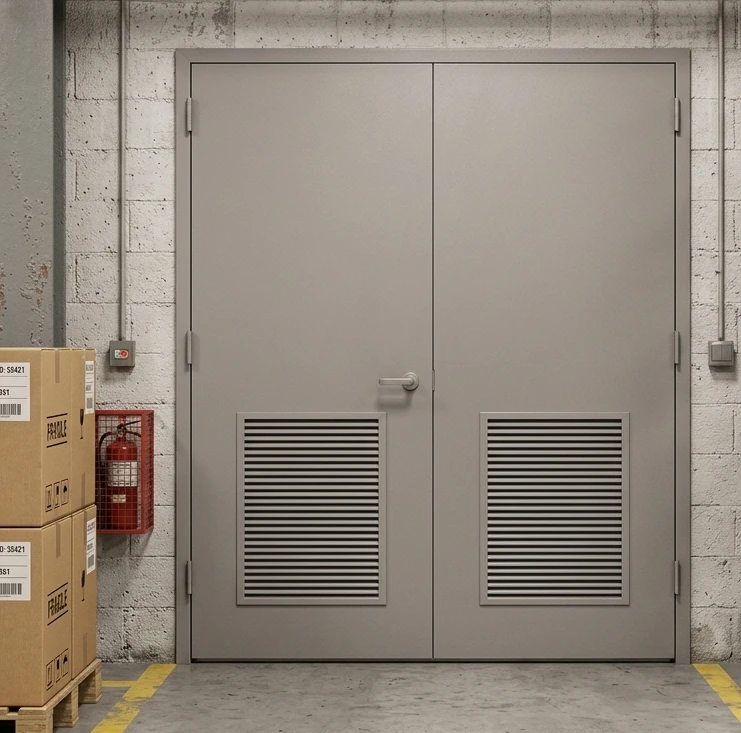
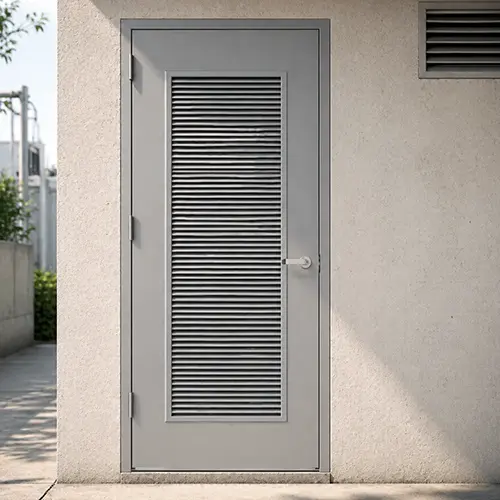
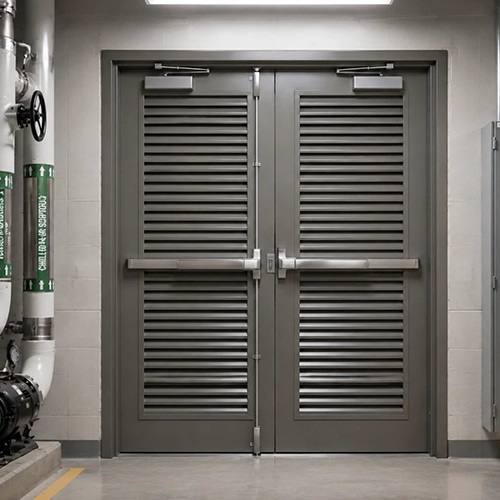
A steel louver door is a specialized door constructed primarily from steel, featuring a series of angled slats (louvers) that allow air and light to pass through while preventing rain, debris, or direct visibility. This design facilitates ventilation in spaces like mechanical rooms, HVAC closets, and outdoor enclosures, balancing airflow and security.
Steel louver doors are widely used in commercial, industrial, and residential buildings, thanks to their robustness, customizability, and aesthetic appeal.
The size of steel louver doors is an essential consideration for fitting into door frames and ensuring proper function. Based on width and height, steel louver doors are typically categorized as:
This sizing framework provides flexibility and ensures that the steel louver door fits perfectly into various architectural designs, from narrow passages to large-scale entrances.
Louvers are the heart of a steel louver door. Their size can be tailored to balance ventilation, privacy, and security:
Customizing louver sizes allows building designers to tailor airflow and visibility based on specific environmental needs. For instance, larger louvers enhance ventilation for machinery rooms, while smaller louvers provide privacy in office interiors.
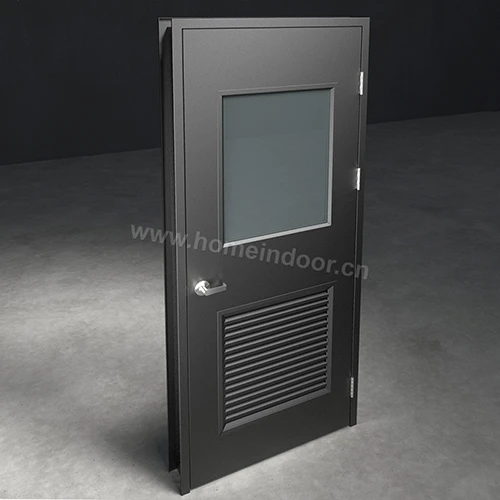
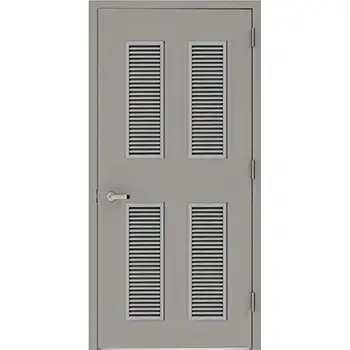
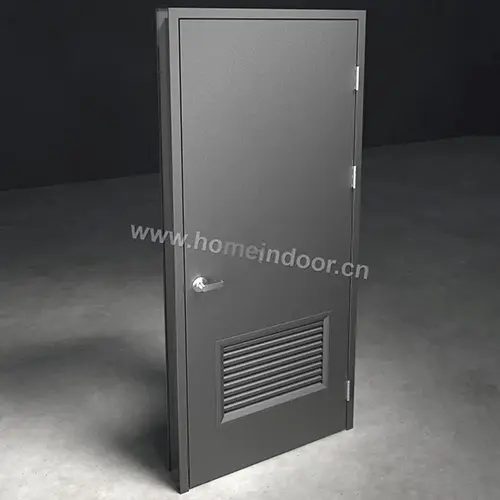
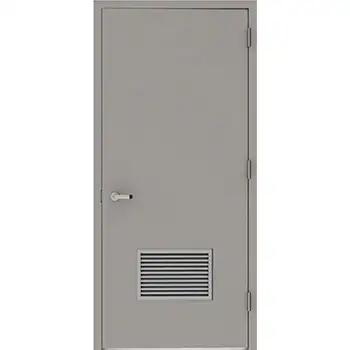
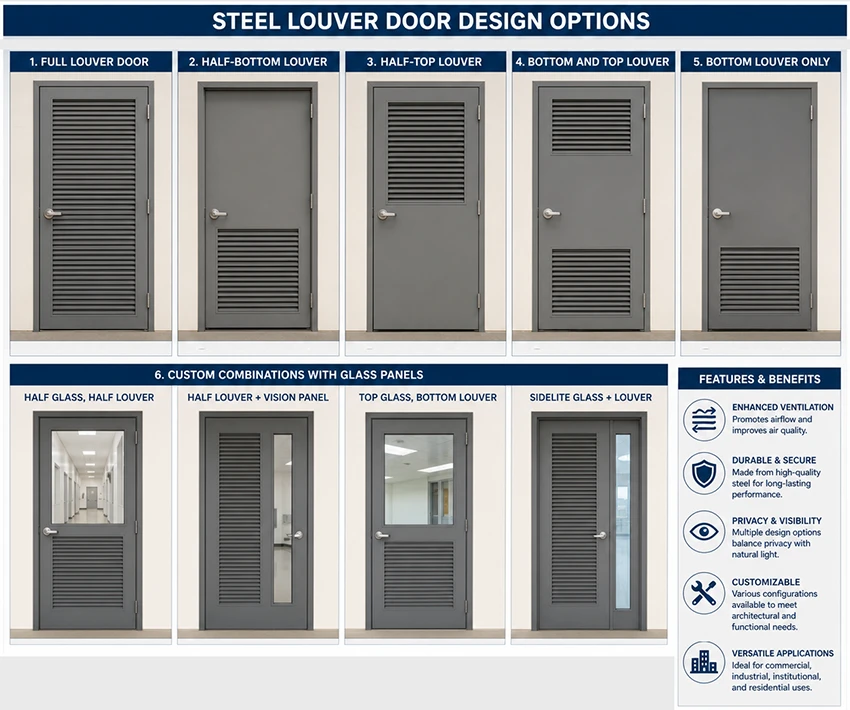
Steel louver doors come in several design configurations, each serving different functional and aesthetic purposes:
These customizable designs ensure steel louver doors can fit varied architectural aesthetics and functional requirements.
Selecting the right louver type enhances the door’s performance according to specific needs:
Different louver blade designs affect airflow, weather resistance, and privacy:
Covering with intumescent smoke seal. When the temperature rises, the smoke seal expands more than 30 times its original size, blocking the gaps between the louver blades.
This helps prevent smoke and fire from spreading,
Use on fire-rated doors.
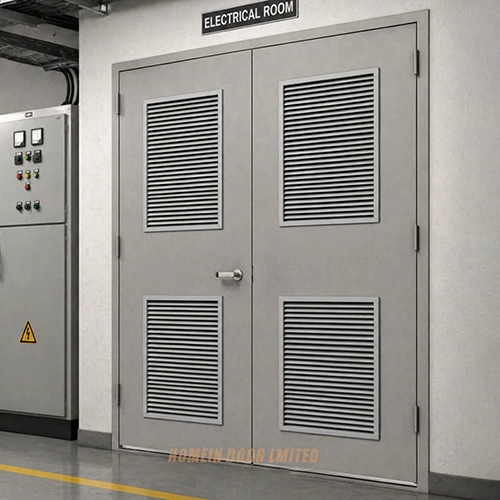
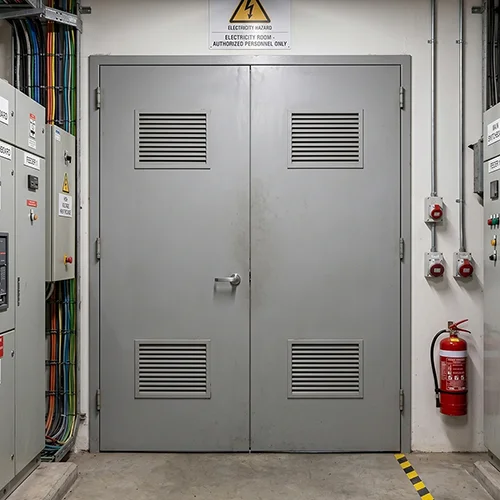
Equipment rooms, electrical enclosures, and HVAC system access points.
Exterior security doors requiring airflow without sacrificing protection.
Garages, service entrances, and mechanical equipment shelters.
Mechanical and electrical rooms requiring ventilation.
Storage rooms and janitor closets.
Offices and commercial interiors where airflow and privacy must be balanced.
Their durability and ventilation features make steel louver doors a popular choice in commercial buildings, factories, hospitals, schools, and residential complexes.
Beyond functionality, aesthetics are important. Our steel louver doors feature an interlocking screwless louver frame, offering:
A clean, streamlined appearance with no visible screws or fasteners.
Enhanced resistance to corrosion and wear, as there are fewer exposed components.
Simplified maintenance and cleaning due to fewer joints and crevices.
This modern frame design improves the overall look of steel louver doors, making them suitable for visible locations without compromising durability.
Selecting the right material for steel louver doors impacts performance, cost, and longevity:
Cold-Rolled Steel: Economical with good mechanical strength. Best for indoor or sheltered environments.
Galvanized Steel: Coated with zinc for enhanced corrosion resistance, suitable for outdoor use or humid conditions.
304 Stainless Steel: Premium option offering superior corrosion resistance and an attractive finish, ideal for coastal or highly corrosive environments.
Door Leaf Thickness: Between 0.8mm and 1.2mm for strength and durability.
Door Frame Thickness: Between 1.2mm and 1.8mm to ensure stability and resistance to warping.
Choosing the correct combination ensures the door withstands environmental conditions while maintaining a sleek profile.
Louvers can be fabricated from different materials based on environment and budget:
Galvanized Steel Louvers: Durable and cost-effective with excellent rust resistance.
Aluminum Alloy Louvers: Lightweight and corrosion-resistant, especially suitable for coastal or chemical-exposed locations.
304 Stainless Steel Louvers: High strength and corrosion resistance, used for high-end or harsh environment applications.
The right louver material helps maximize the door’s lifespan and performance under specific environmental conditions.
Choosing the perfect steel louver door involves understanding key aspects such as size, design, louver types, blade options, fire resistance, materials, and application environments. Whether you require a single door for a mechanical room or double doors with custom glass panels for a commercial building, steel louver doors offer unmatched flexibility, durability, and ventilation.
From robust galvanized steel with corrosion-resistant louvers to fire-rated models capable of two-hour fire resistance, these metal louver doors meet diverse architectural and safety needs. Additionally, with modern aesthetics like interlocking screwless frames, steel louver doors elevate both function and appearance.
For any project demanding a combination of airflow, security, and style, steel louver doors are an excellent, long-lasting choice.
Steel louver doors are usually made from galvanized steel sheets with a steel frame. The louver insert can be steel or aluminum.
Yes. Steel louver doors can be made with fire-rated and smoke-proof louvers. These louvers use intumescent smoke seals that expand under high temperature to block smoke and fire spread.
Yes. Exterior steel louver doors can be used for equipment rooms, HVAC rooms, garages, and service entrances. Rain-resistant louver blades, such as Z-blade or inverted V-blade, are recommended for outdoor use.
Common finishes include powder coating, primer coating, and customized RAL colors. Galvanized steel helps improve corrosion resistance.
Yes, with the right louver design. Z-blade louvers and inverted V-blade louvers provide better protection against rain and wind-driven water.
Yes. Insect mesh, bird screen, or security mesh can be installed behind the louver to prevent insects, birds, or debris from entering.
Yes. Steel louver doors are made from galvanized steel and can be supplied with reinforced frames, commercial locks, heavy-duty hinges, and security mesh for better protection.
Yes. Galvanized steel with powder coating provides good corrosion resistance. For coastal or highly humid areas, stainless steel or special anti-corrosion coating can also be used.
Yes. A steel door can be designed with a vision panel and a louver, combining visibility, ventilation, and security.
Tel/wechat/whatsapp : +86 13758983507
Email : info@homeindoor.cn
Scan to contact us by wechat

Copyright Homein Door Limited