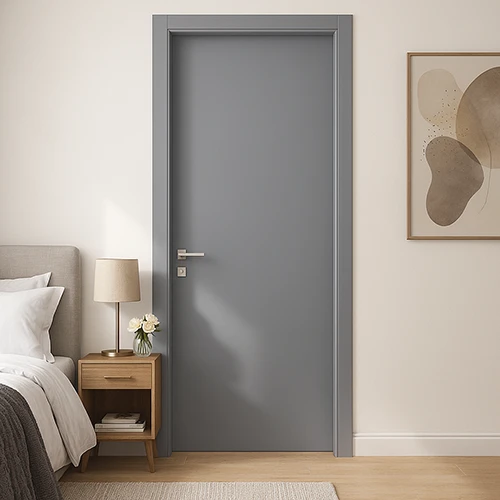
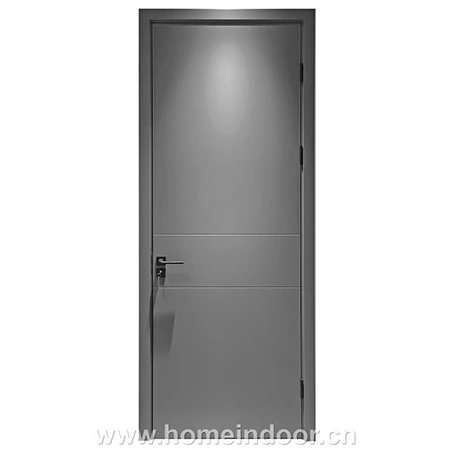
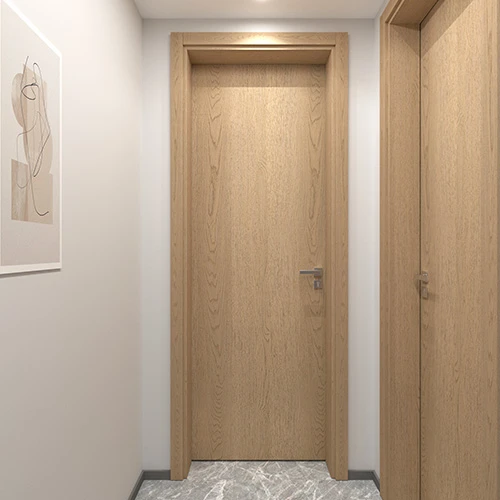
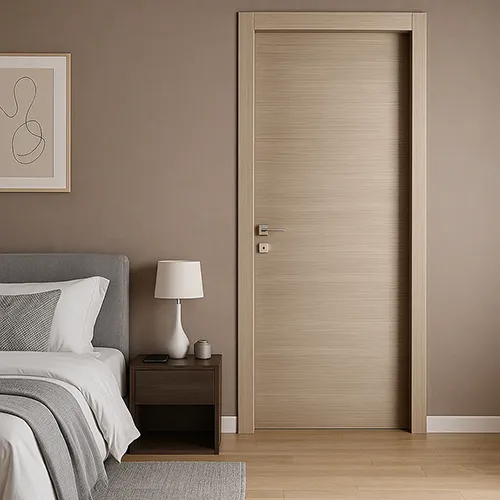
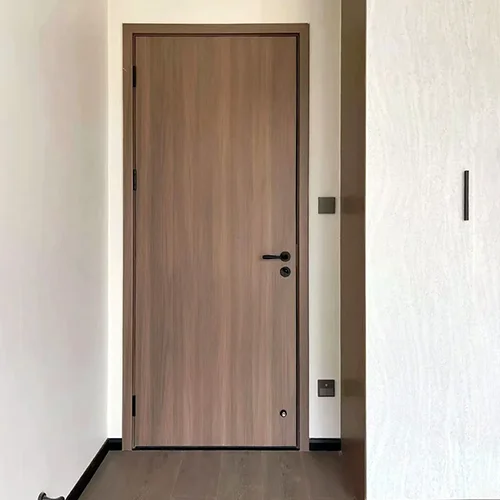
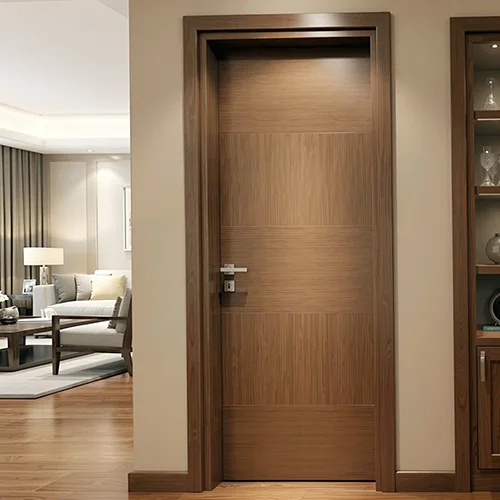
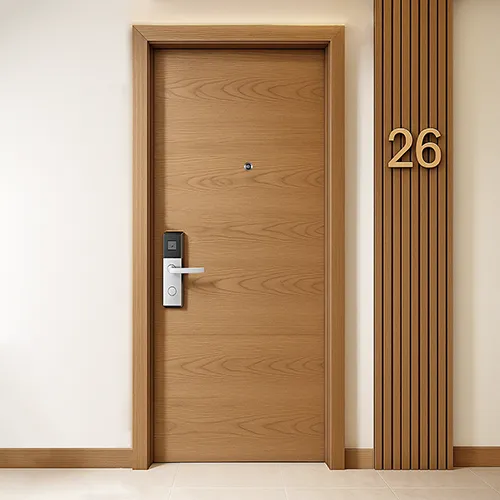
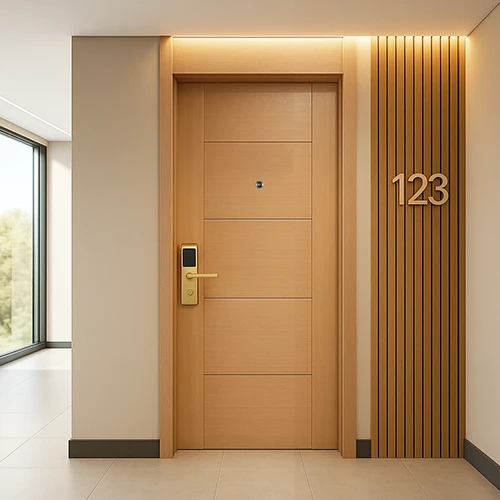
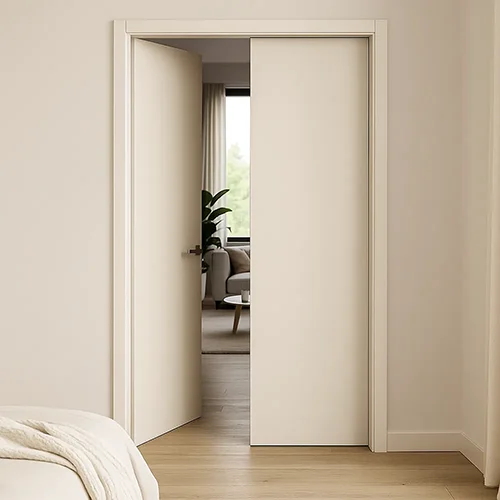
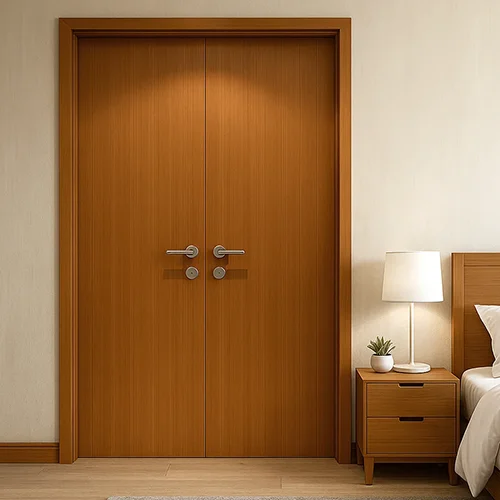
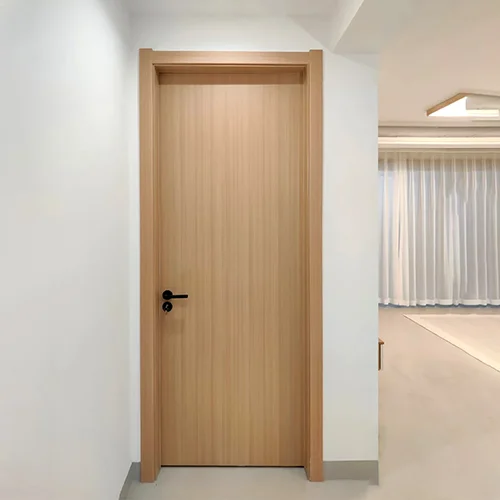
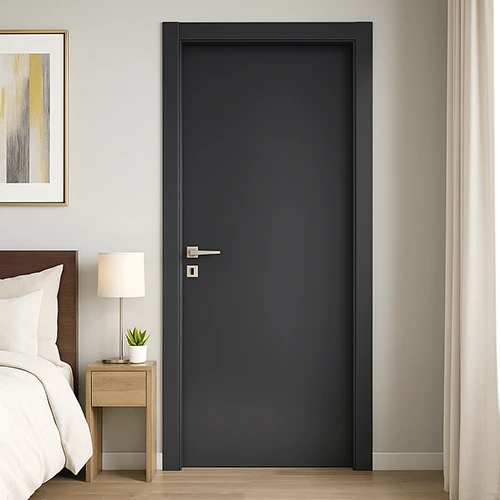
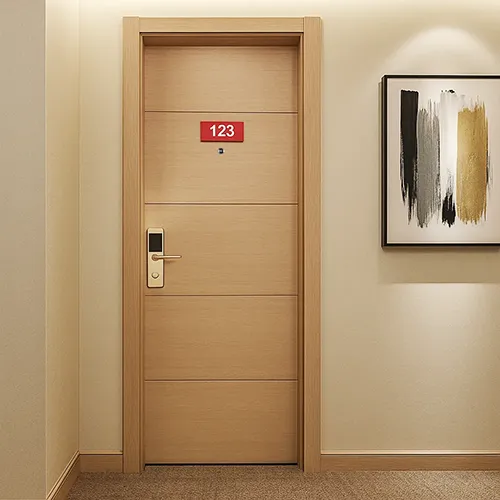
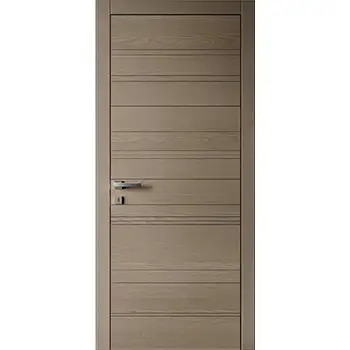
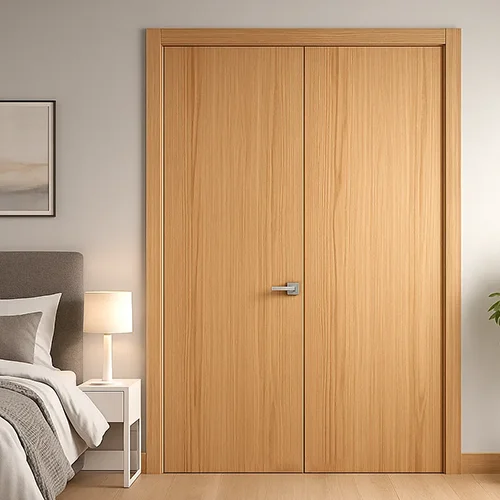
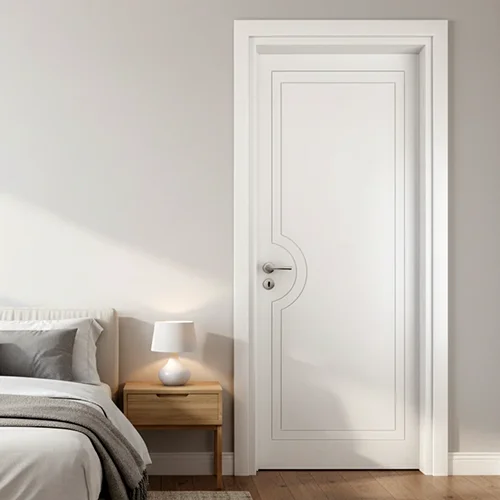
A hotel room door is much more than a simple entrance panel. For guests, it is the first physical contact with the private space they have booked. For hotel owners, architects, contractors, and developers, it is a critical building component that affects fire safety, acoustic comfort, privacy, accessibility, security, durability, brand image, and long-term maintenance cost. A well-designed hotel room door must combine quality functional performance with a warm hospitality appearance. It should protect the guest, support smooth hotel operation, and match the design standard of the whole property.
1. What Is a Hotel Room Door?
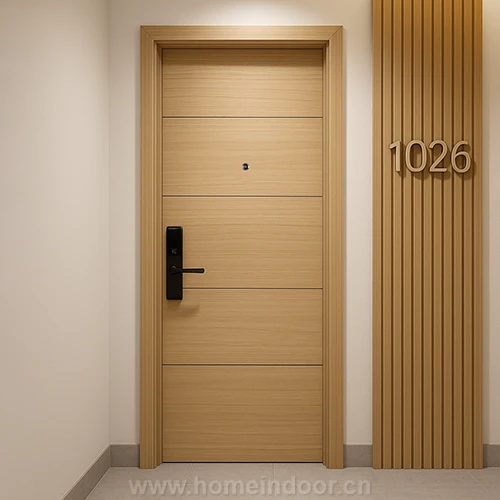
A hotel room door is the main entry door installed between the hotel corridor (hallway )and the guest room. In most projects, it is a fire-rated, solid-core,durable, acoustic, secure, and decorative door system. The complete system normally includes the door leaf, frame, hinges, card lock, closer, seals, peephole or viewer, door guard, threshold or automatic drop seal, signage.
Unlike ordinary interior doors used in homes, hotel room doors work in a demanding commercial environment. They are opened and closed many times every day by guests, housekeeping staff, maintenance teams, and hotel management. They also need to perform during emergencies, especially fire and smoke events. Because of this, hotel room doors are usually specified as tested door assemblies rather than only decorative door leaves.
2. Fire Safety Is the Core Requirement
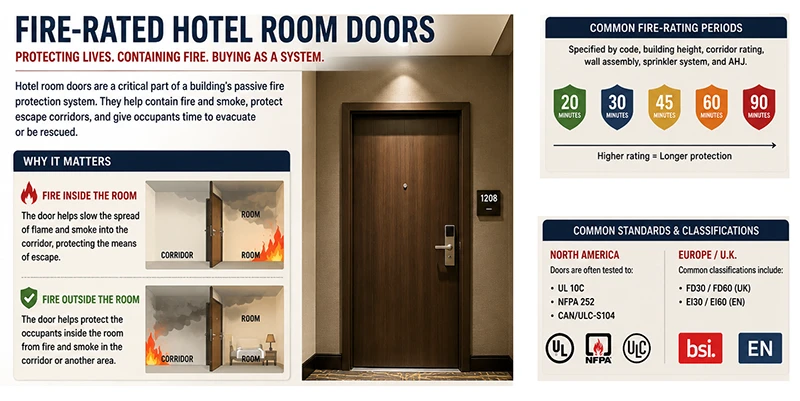
Fire safety is one of the most important reasons hotel room doors are carefully regulated. Hotels are sleeping accommodation buildings, which means occupants may be unfamiliar with the building layout and may be asleep when an emergency happens. The guest room door helps form a protective barrier between the room and the corridor. If a fire starts inside a room, the door helps slow the spread of flame and smoke into the escape corridor. If a fire starts in the corridor or another area, the door helps protect the guest room long enough for evacuation or rescue.
Common hotel guest room doors may be specified with ratings such as 20 minutes, 30 minutes, 45 minutes, 60 minutes, or 90 minutes, depending on local code, building height, corridor rating, wall assembly, sprinkler system, and the authority having jurisdiction. In North America, hotel fire doors are often tested to standards such as UL 10C, NFPA 252, or CAN/ULC-S104. In Europe and the U.K., classifications such as FD30, FD60, EI30, and EI60 are commonly used according to relevant test and classification systems.
A fire-rated hotel room door is not only about the door leaf. The frame, hinges, lock, latch, closer, seals, glazing, viewer, and other hardware must be compatible with the tested assembly. If a non-tested lock or unsuitable hinge is installed, the fire performance can be weakened. For this reason, hotel projects should purchase the door, frame, and hardware as a coordinated system whenever possible.
3. Smoke Control and Self-Closing Function
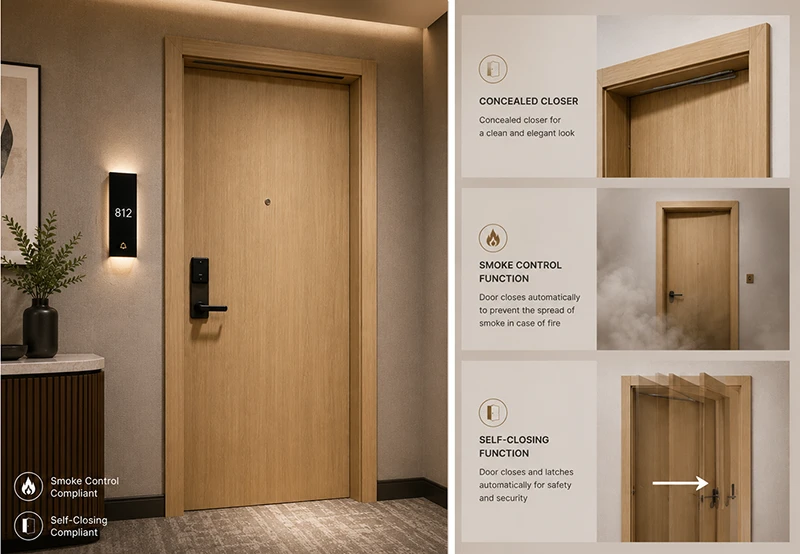
In real hotel fires, smoke can be more dangerous than flame. Smoke can quickly fill corridors and stairways, reducing visibility and making evacuation difficult. This is why hotel room doors often require smoke seals, intumescent strips, and reliable door closers.
A self-closing device ensures that the door returns to the closed position after the guest enters or leaves the room. A closed fire door can perform as a barrier; an open door cannot. The latch is also important because the door must close and latch securely. If the door only rests against the frame without latching, pressure from smoke, air movement, or fire conditions may push it open.
For hotel operation, the closer should be strong enough to close the door, but not so aggressive that it slams loudly. A high-quality closer improves safety, reduces guest complaints, protects the frame and hardware, and creates a more premium feeling.
4. Acoustic Comfort and Guest Privacy
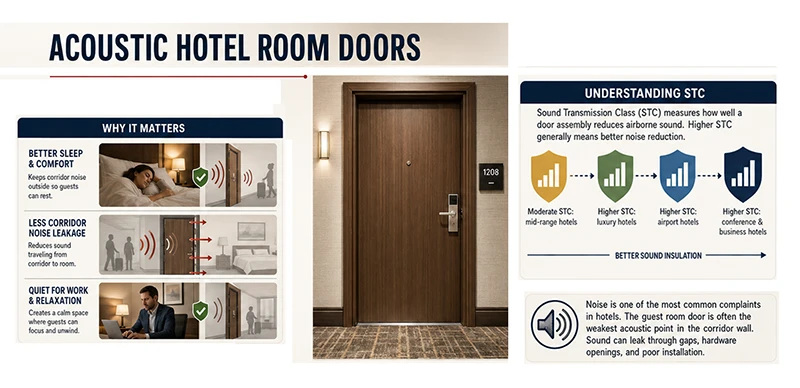
Noise is one of the most common complaints in hotels. Guests expect quiet rooms where they can sleep, work, and relax. A hotel room door is often the weakest acoustic point in the corridor wall. Even if the wall has high sound insulation, noise can leak through the door gap, frame perimeter, undercut, lockset opening, or poor installation.
For this reason, acoustic performance should be considered at the beginning of the hotel door specification. Sound Transmission Class, often called STC, is commonly used to describe how well a door assembly reduces airborne sound. Mid-range hotel projects may use moderate STC-rated doors, while luxury hotels, airport hotels, conference hotels, and business hotels often require higher acoustic ratings.
A good acoustic hotel door normally uses a dense solid core, accurate frame fit, perimeter seals, and an automatic drop seal at the bottom. The drop seal lowers automatically when the door closes, sealing the gap near the floor. This helps reduce corridor noise, housekeeping noise, elevator lobby noise, and conversations from outside the room.
The key point is that acoustic performance depends on the complete installed system. A high-STC door leaf will not perform well if the frame is poorly installed, the bottom gap is too large, or the seals are missing.
5. Security and Access Control
Security is another major function of a hotel room door. Guests trust the hotel to provide a private and safe space for their belongings and personal rest. A hotel room door should resist normal forced entry attempts, provide controlled access, and allow emergency access by authorized staff.
Modern hotels often use electronic RFID locks, magnetic keycard systems, mobile phone access, or cloud-connected access management platforms. These systems improve check-in efficiency and allow hotels to control access records, cancel lost cards, and manage staff permissions. Mobile access is becoming more popular because guests can use their smartphones instead of carrying a physical card.
However, electronic locks must be chosen carefully. Cybersecurity, encryption, audit trail reliability, battery life, emergency override, and integration with hotel property management systems are all important. The lock should also be compatible with fire-door requirements. The electronic function should not prevent safe egress from inside the room during an emergency.
Common hotel room door hardware may include an electronic lock, privacy deadbolt, door viewer, door guard, door closer, hinges, kick plate, smoke seal, and automatic drop seal. In high-end hotels, concealed hinges, magnetic locks, hidden closers, or designer lever handles may be used to improve aesthetics.

6. Accessibility and User-Friendly Design
A hotel serves many types of guests, including people using wheelchairs, walkers, crutches, luggage carts, or strollers. Therefore, hotel room doors must be designed for accessibility. Door clear opening width, threshold height, handle height, opening force, maneuvering clearance, and hardware shape all matter.
Accessible hotel doors should be easy to operate with one hand and should not require tight grasping, pinching, or twisting. Lever handles are often preferred because they are easier to use than round knobs. The entrance should provide enough clear passage width for mobility devices and luggage. Thresholds should be low and safe to cross.
Accessibility is not only a legal requirement in many markets; it is also good hospitality. A guest-friendly door makes the room easier to enter, improves the arrival experience, and reduces frustration.
7. Door Materials and Core Construction
Hotel room doors are commonly made from wood, engineered wood, steel, or composite materials. The most popular choice for guest rooms is often a wood or engineered wood fire-rated door because it offers a warm appearance, good acoustic performance, and many finish options.
The core is the heart of the door. Common core options include particleboard core, mineral core, solid timber core, tubular core, composite core, or special acoustic core. For fire-rated hotel doors, the core must be part of the tested design. For acoustic hotel doors, density and stability are very important.
A hollow-core door is generally not suitable for hotel guest room entrances because it offers poor acoustic performance, low impact resistance, and weak fire performance. A solid-core or fire-rated core is a better choice for hotel rooms because it feels more substantial, closes with a premium sound, and provides better safety and privacy.
8. Surface Finish and Interior Design
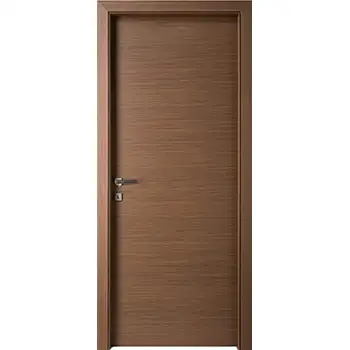
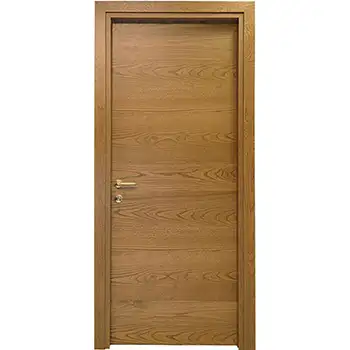
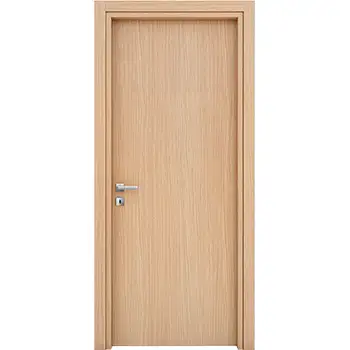
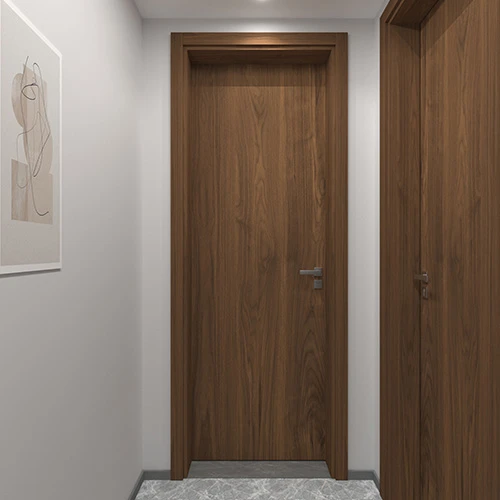
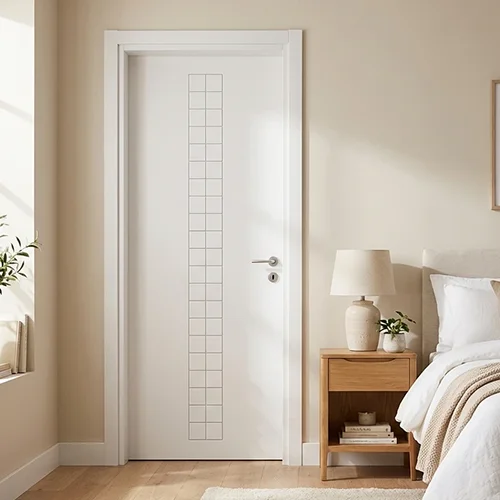
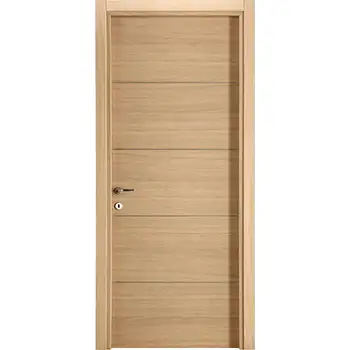
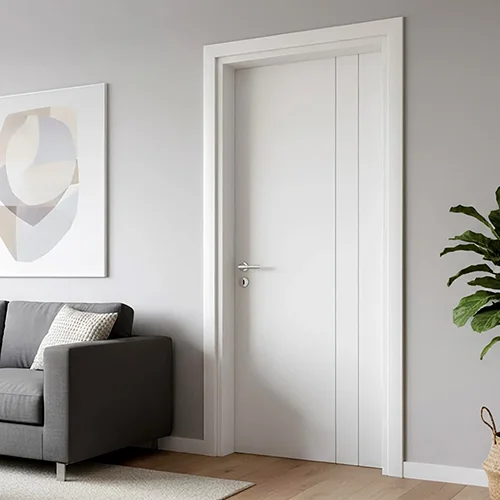
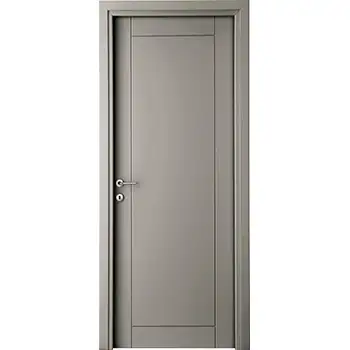
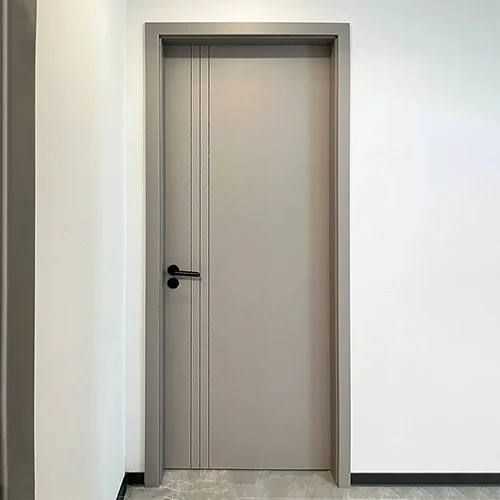
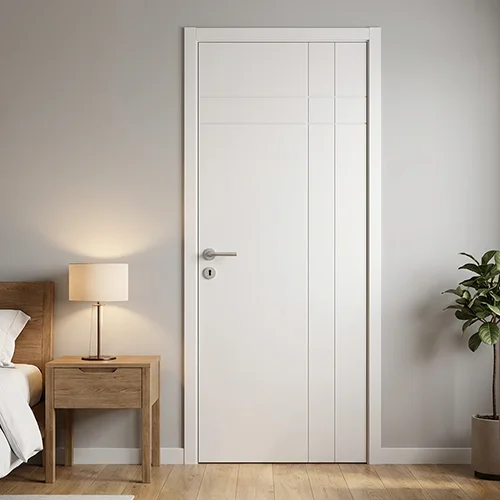
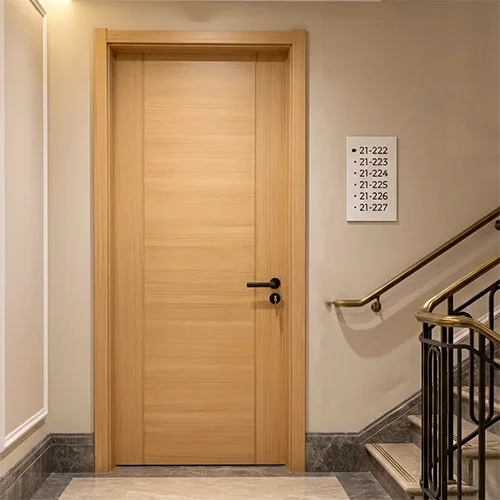
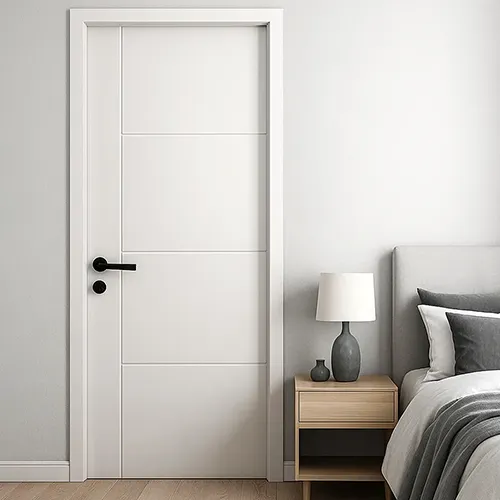
The hotel room door is part of the guest’s first impression. It should match the interior design concept of the corridor and room. Common finishes include natural wood veneer, stained veneer, painted finish, high-pressure laminate, melamine, PVC film, metal inlay, groove design, or decorative molding.
Luxury hotels often choose natural veneer such as oak, walnut, ash, teak, or engineered veneer with consistent grain. Business hotels may prefer durable laminate because it resists scratches, stains, and cleaning chemicals. Resort hotels may choose warmer wood textures to create a relaxed feeling. Modern hotels often use flush doors with clean lines, concealed frames, and simple hardware.
Durability should always be considered. Hotel corridors are high-traffic areas where luggage, housekeeping carts, and maintenance tools may hit the door. Edge protection, kick plates, impact-resistant finishes, and repairable surfaces can reduce long-term maintenance costs.
9. Connecting Room Doors
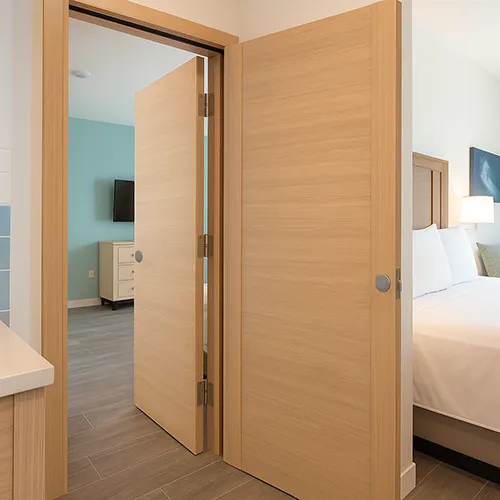
Many hotels use connecting room doors between adjacent guest rooms. These doors allow two rooms to be used together by families, groups, or VIP guests. When not in use, they must protect privacy, security, fire performance, and sound insulation.
A typical connecting room door system may use two separate doors, one opening into each room. Each guest controls the door from their side. Good connecting room doors should have strong seals, reliable locks, and suitable fire ratings. Acoustic performance is especially important because guests do not want to hear conversations, television sound, or bathroom noise from the next room.
10. Installation Quality Is Critical
Even the best hotel room door can fail if installation is poor. The frame must be square, plumb, and securely fixed. The gap between the door leaf and frame should follow the manufacturer’s instructions. Hinges must be aligned, the closer must be adjusted, and the latch must engage smoothly. Seals must make continuous contact without excessive friction.
For fire-rated doors, field modifications should be strictly controlled. Cutting the door, drilling new holes, changing hardware, trimming too much from the bottom, or painting over labels can compromise compliance. For acoustic doors, even small gaps can cause major sound leakage.
Professional installation, inspection, and documentation are essential for hotel projects. A good supplier should provide shop drawings, hardware preparation details, labels, certificates, packing lists, and installation guidance.
11. Maintenance and Hotel Operation
Hotel room doors require regular inspection. Hotel staff should check whether the door closes fully, latches properly, and has no damaged seals. They should also check whether the closer is leaking, the hinges are loose, the lock works correctly, the battery is low, or the door rubs against the frame.
Fire doors should never be wedged open. Damaged fire labels, missing intumescent strips, broken smoke seals, and non-working closers should be repaired quickly. Electronic locks should be maintained with a battery replacement schedule and emergency access procedure.
Preventive maintenance is much cheaper than emergency replacement. A well-maintained hotel room door protects guests, reduces complaints, and extends the service life of the property.
12. How to Choose the Right Hotel Room Door
When choosing a hotel room door, the project team should not focus only on price or appearance. The correct specification should consider building code, fire rating, acoustic requirement, door size, guest profile, hotel brand standard, climate, corridor design, hardware type, lock system, accessibility, and maintenance plan.
For economy hotels, a durable fire-rated door with reliable hardware and moderate acoustic performance may be enough. For mid-range hotels, better finishes, stronger sound insulation, and electronic locks are usually expected. For luxury hotels, the door should offer high acoustic comfort, elegant finishes, premium hardware, soft closing performance, and seamless access-control integration.
A good hotel room door should achieve a balance: safe but beautiful, strong but easy to use, quiet but practical, compliant but cost-effective.
Conclusion
A hotel room door is a complete performance system, not just a decorative panel. It protects the guest from fire and smoke, reduces noise, supports privacy, controls access, improves accessibility, and expresses the hotel’s design quality. From fire-rated core construction to acoustic seals, from electronic locks to durable finishes, every detail affects guest experience and hotel operation.
For hotel developers, contractors, architects, and purchasing teams, investing in the right hotel room door means investing in safety, comfort, brand value, and long-term reliability. A well-specified and well-installed hotel room door helps create the quiet, secure, and welcoming environment every guest expects when they close the door behind them.