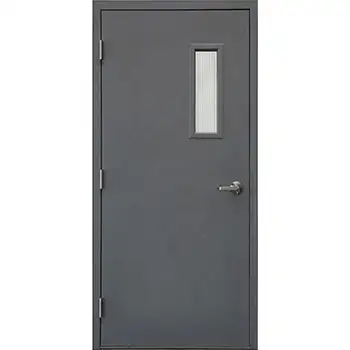
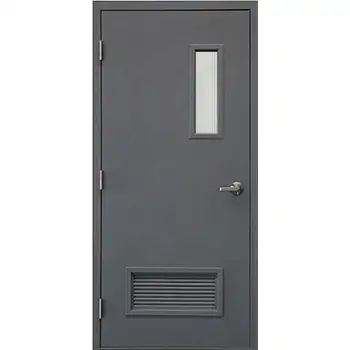
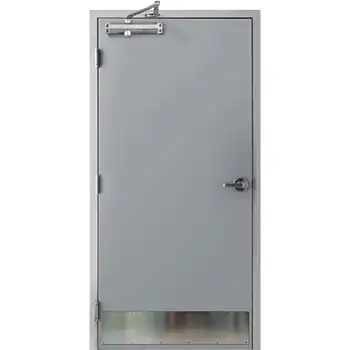
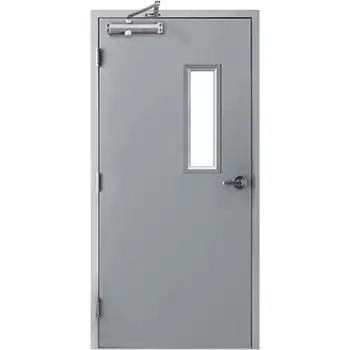
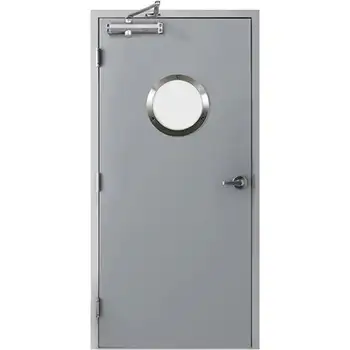
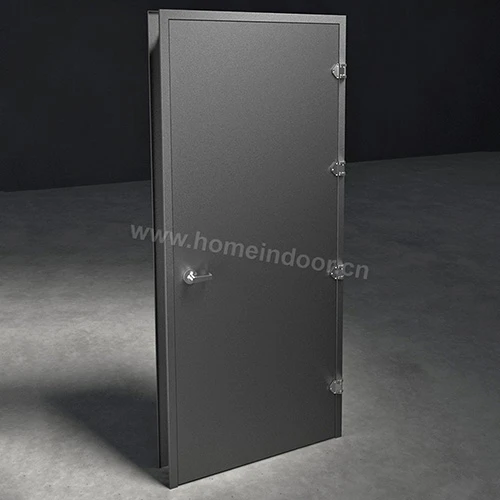
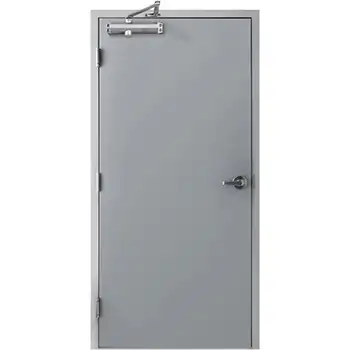
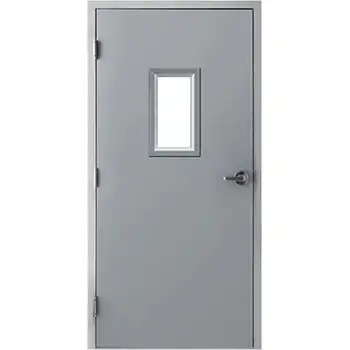
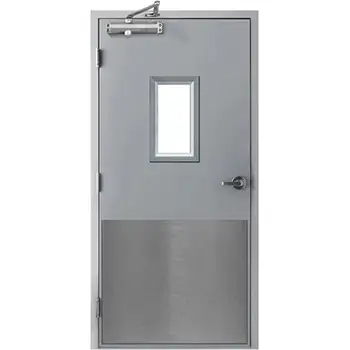
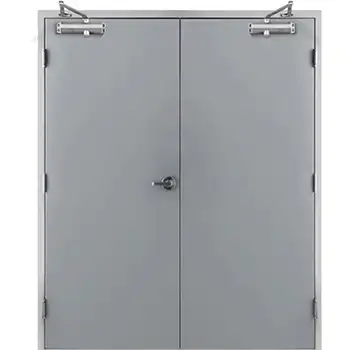
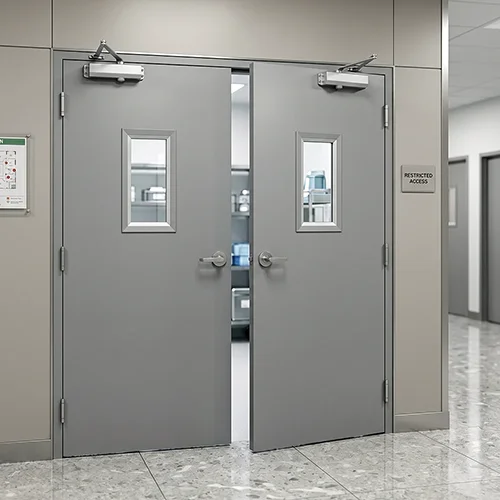
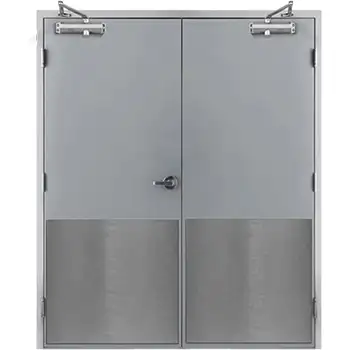
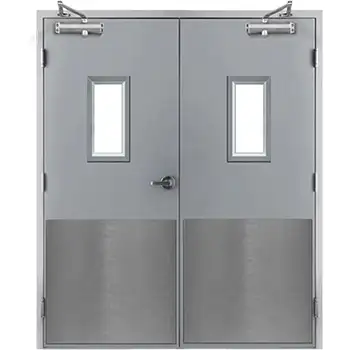
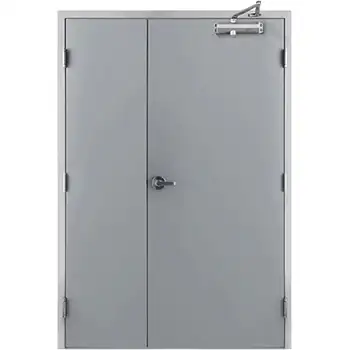
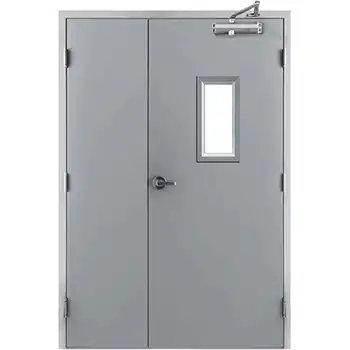
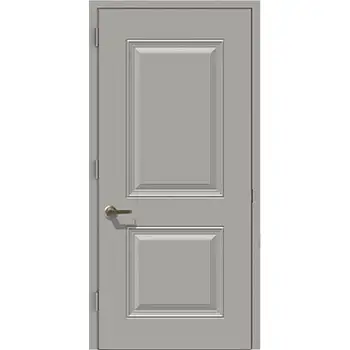
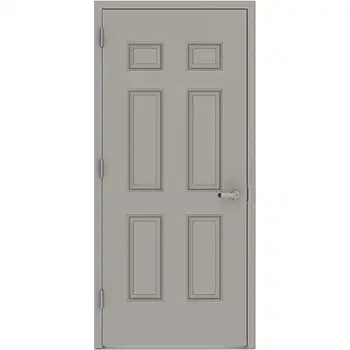
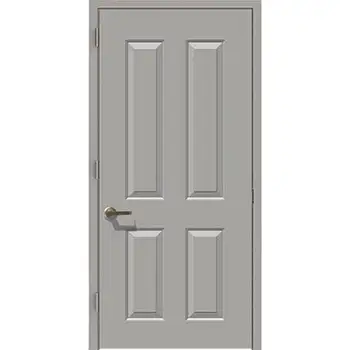
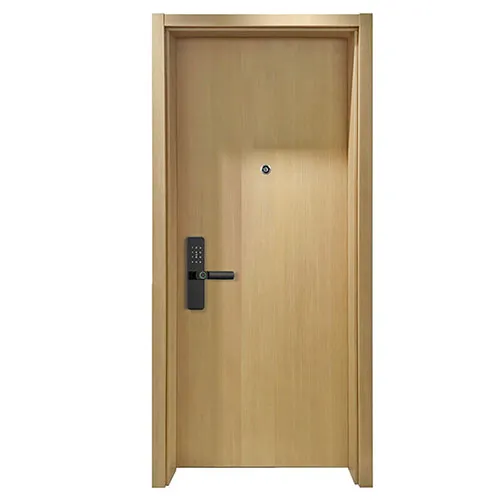
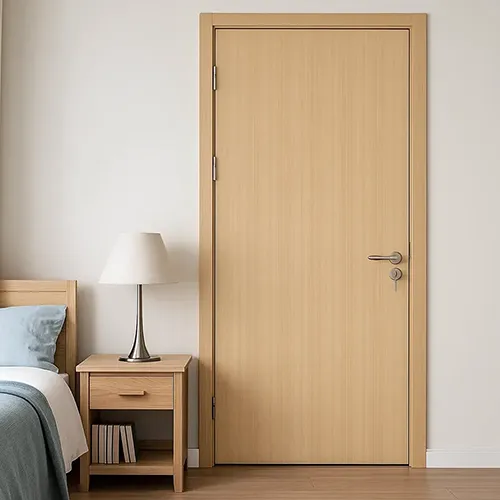
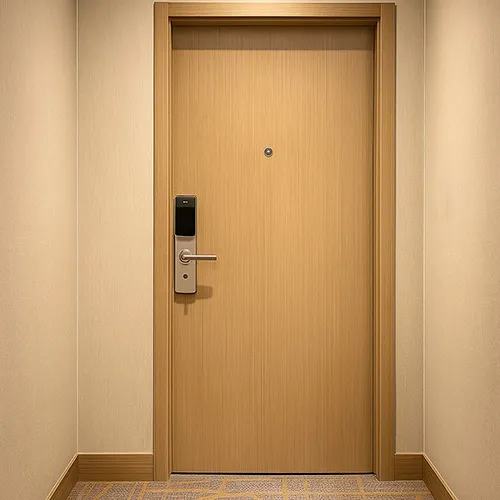
What is self-close commercial steel door
- Hydraulic door closer
- Spring hinge
- Hydraulic Spring hinge
- Floor spring
Why choose Self-close commercial door
Automatic closing: After people pass through the doorway, the door closes automatically without requiring someone to pull or push it shut.
Better fire and smoke protection: When used as part of a certified fire-rated door assembly, the self-closing function helps keep the door closed so that the fire barrier can perform as designed.
Improved building security: A door that automatically returns to the closed position reduces the possibility of entrances, service rooms, stairwells or restricted areas being unintentionally left open.
Better temperature control: Keeping doors closed helps reduce unwanted air exchange between different areas, improving HVAC efficiency.
Noise control: Automatic closing helps separate noisy mechanical rooms, corridors, workshops and public spaces.
Durable for high-traffic areas: Steel commercial doors are suitable for frequent daily operation and can be combined with heavy-duty commercial-grade closers and hinges.
Convenient operation: Users simply open the door and pass through. The closer completes the closing cycle automatically.
Self-close mechanizam device compareation
1. Hydraulic Door Closer
How it works:
A hydraulic door closer uses a spring to provide the closing force and hydraulic oil to control the closing speed. When the door is opened, the spring is compressed. After the door is released, the spring pushes the door closed while the hydraulic system slows and controls the movement.
Advantages:
Smooth and controlled closing
Adjustable closing speed
Helps prevent door slamming
Suitable for heavy commercial doors
Good for high-frequency use
Commonly used on fire-rated doors
Limitations:
More expensive than a spring hinge
Requires proper installation and adjustment
Hydraulic oil may leak after long-term use
The closer body is visible on the door
Requires occasional maintenance
2. Spring Hinge
How it works:
A spring hinge has a mechanical spring built into the hinge. When the door is opened, the spring is tensioned. Once the door is released, the spring automatically pulls the door back to the closed position.
Advantages:
Simple construction
Low cost
Easy to install
Compact appearance
No separate door closer is required
Suitable for light or medium-duty doors
Limitations:
Closing speed is difficult to control accurately
Door may close too quickly or slam
Not ideal for very heavy doors
Spring tension may weaken over time
Less suitable for very high-traffic applications
3. Hydraulic Spring Hinge
How it works:
A hydraulic spring hinge combines a spring and hydraulic damping system inside the hinge. The spring provides the force to close the door, while the hydraulic mechanism controls the closing speed and reduces impact.
Advantages:
Smooth self-closing action
Better speed control than a normal spring hinge
More concealed than a traditional door closer
Cleaner appearance
Reduces door slamming
Suitable for many commercial doors
Limitations:
More expensive than a standard spring hinge
More complicated internal structure
Load capacity depends on the hinge model
Adjustment may be more difficult
Hydraulic components can wear or leak over time
4. Floor Spring
How it works:
A floor spring is installed inside the floor underneath the door. It uses a spring and hydraulic mechanism to control the opening and closing of the door. The door is connected to the floor spring through a spindle or pivot.
Advantages:
Suitable for large and heavy doors
Smooth and stable opening and closing
High load capacity
Mechanism is mostly hidden in the floor
Can support double-action doors
Good appearance for commercial entrances and glass doors
Limitations:
High installation cost
Requires cutting and preparing the floor
Installation must be very accurate
More difficult to repair or replace
Water, dust, or dirt can enter the floor box
Maintenance is more difficult than an overhead door closer